> Development > International Cooperation


The hydrological tension between India and China because of the Brahmaputra River has often grabbed the headlines and is not a subject matter alien to the global crowd. Over the years, although no active armed conflict over water has occurred, the expiry of data-sharing arrangements combined with the development of upstream hydropower development, and the absence of a binding water treaty has led to many disputes. These disputes are characterised by mistrust, asymmetry in sharing of information, and concerns over downstream impacts because of hydrological projects in India’s north-eastern states. In this regard, International water law provides a comprehensive and peaceful strategy for resolving these disputes. This article examines the existing applicable legal principles, relevant mechanisms, and robust legal methods through which India and China can arrive at a solution to resolve these persistent disputes.
Data highlights that the Brahmaputra basin extends approximately over an area of 580,000 km². Out of it, 50.5% of the catchment area in the Tibetan Autonomous Region is controlled by China. The Brahmaputra originates at an elevation exceeding 5,150 metres and flows roughly 2,880–3,080 km before entering Indian territory. The average annual discharge of the river ranges between 19,800 and 22,000 m³/s, which makes it one of the world’s largest rivers by volume. In fact, during the monsoon, the average peak flow of the river often surpasses 103,000 m³/s. An average sediment load of 735 million metric tonnes is transported by the river annually.
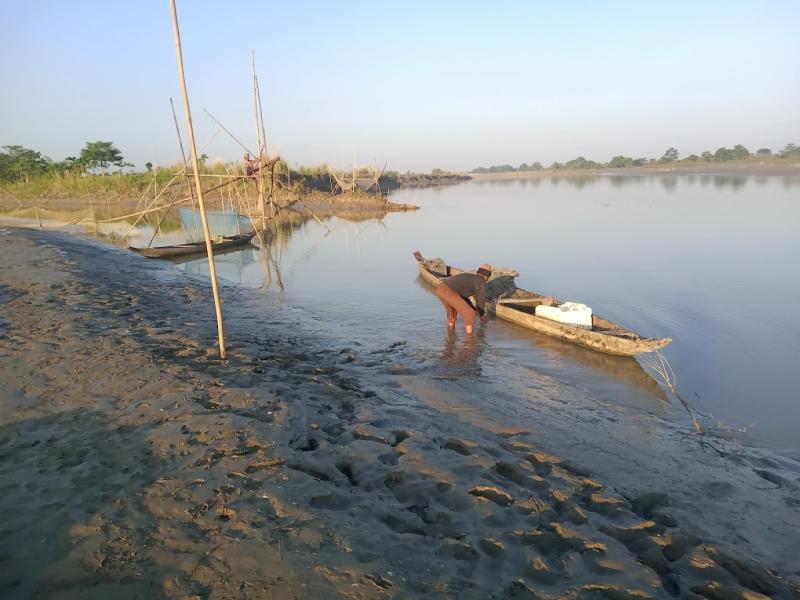
Photo- NEZINE
The hydrological power of the Brahmaputra has been significantly utilised by China as the country has constructed the Zangmu Dam with an installed capacity of 510 MW. The dam became fully operational in 2015. In July 2025, China proceeded with the construction of the Medog Hydropower Station. This was planned with a capacity of approximately 60 GW and annual generation of around 300 TWh. The construction of these projects has raised concerns in India. The concerns regarding potential alterations to flow timing, reduction in discharge during the dry-season and trapping of sediment which is pivotal for sustaining the Brahmaputra valley’s agriculture and ecology.
The river Brahmaputra is also an inseparable element for the Indian state of Assam. Statistics provide that 31.05 lakh hectares, representing 39.58% of the state’s geographical area, has been classified as flood-prone, compared to the country’s national average of approximately 10.2%. The annual floods that occur in the state cause economic losses which are estimated at ?200 crore, with peaks reaching ?771 crore in 2004. These alarming statistics show the high stakes for India and the potential transboundary effects of upstream decisions by China.
The lack of a comprehensive water-sharing or management treaty can be regarded as one of the core elements of the dispute. In June 2023, the 2013 Memorandum of Understanding on hydrological data expired and thus sharing of the data didn't take place properly. Further, the development of major hydropower projects without prior notification or joint assessment simply worsened the case. India has expressed concerns that one-sided control over upstream flows could serve as an advantage, while China maintains its sovereign policy right to develop resources within its periphery. As such, the absence of institutionalised mechanisms for dispute prevention and resolution has led to technical disagreements to become entangled with broader geopolitical issues along the Line of Actual Control.
The dispute over Brahmaputra therefore can be resolved by international water law, that provides both substantive principles and procedural mechanisms. Principle codified in Article 5 of the 1997 United Nations Convention on the Law of the Non-Navigational Uses of International Watercourses (UN Watercourses Convention) and Articles IV and V of the 1966 Helsinki Rules, mandates states to utilise shared waters in a manner that takes into consideration all relevant factors, including hydrology, existing uses, social and economic needs, and population dependence.
Although India and China are not members of the UN Watercourses Convention, Article 7 of the Convention puts an obligation to the member countries not to cause significant harm while utilising shared international water resources. Article 8 and 9 provide for the duty to cooperate and exchange of data and prior notification of planned measures respectively. Further, Articles 11–19 provides for essential procedural safeguards. These provisions largely reflect customary international law and as such if India and China become member countries of the Convention and thereby duly follow the mandates the prevailing disputes can be resolved.UN Watercourses Convention further provides for peaceful settlement of disputes through negotiation, mediation, conciliation, arbitration, or adjudication under article of the same.
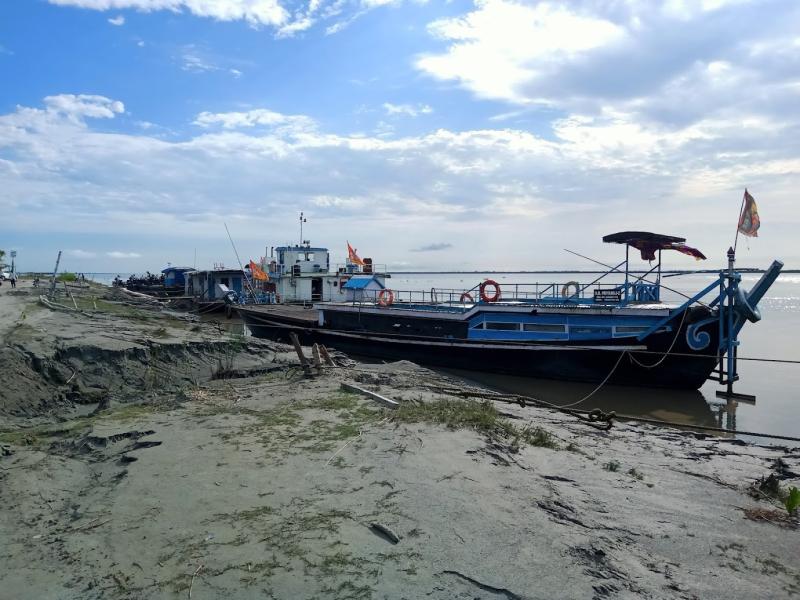
Photo- NEZINE
Additionally, the 1992 UNECE Convention on the Protection and Use of Transboundary Watercourses and International Lakes reinforces obligations of joint monitoring and institutional cooperation. In fact, at the domestic level, Section 13 of India’s National Water Policy, 2012 supports international cooperation on transboundary rivers based on equity. Alongside, Section 4 of the Brahmaputra Board Act, 1980 mandates planning for flood control. However, China’s Water Law of the People’s Republic of China, 2002 that governs water resources planning must be interpreted consistently with international obligations.
In the last century, all discussions related to the Brahmaputra as a shared river has primarily occurred through bilateral diplomacy between India and China, a mechanism ill-suited to govern a river shared by multiple States. Neither riparian State made a sustained effort to establish a long-term framework for coordinating the shared governance of the river. For these countries, Brahmaputra is a part of broader strategic and political interests, resulting in agreements driven more by national priorities than by effective transboundary water governance.
In 2006, the Expert Level Mechanism on Trans-border Rivets was established and that remains as the current level of cooperation between the States. The Memorandum of Understanding (MoU)s signed on hydrological data sharing have expired.
Under the 2002 MoU on the Yaluzangbu/Brahmaputra River, China provides hydrological data to India during the flood season, a period extended in 2013. The MoU expired in June 2023 and is under renegotiation. Likewise, the 2005 MoU on the Langqen Zangbo/Sutlej River expired in 2020, while the 2014 Implementation Plan requires India to pay an annual fee for hydrological data.
These arrangements have facilitated technical dialogue on flood management and data sharing, most recently reaffirmed at the 16th Expert Level Mechanism meeting (April 2025). However, they remain non-binding and lack dispute settlement provisions, prior notification requirements, joint impact assessment mechanisms, or a permanent joint commission with decision-making authority. Border disputes, geopolitical rivalry, and mutual distrust continue to impede sustained cooperation.
International law provides several pathways to strengthen transboundary governance of the Brahmaputra. These are discussed below:
The most effective approach is a dedicated basin-wide treaty or framework agreement incorporating the principles of equitable utilisation, data exchange, prior notification, and cooperative reservoir management. Article 33 of the UN Watercourses Convention (UNWC) encourages States to resolve disputes through negotiation in good faith.
Bilateral arrangements alone are insufficient. They are fragmented, outdated, and often favour upstream States, leaving downstream countries such as Bangladesh at a disadvantage. A multilateral framework would better balance the interests and vulnerabilities of all riparian States.
Diplomatic deadlocks can be solved by international involvement that helps overcome the issue by providing a neutral platform for dialogue. This was demonstrated by the United Nations' role in facilitating the 1977 Ganges Waters Agreement between India and Bangladesh. In this regard Short-term MoUs that are signed between stakeholders should evolve into permanent institutional arrangements. Specially for India and China, the countries can strengthen the existing Expert Level Mechanism by establishing a Joint River Commission with a legal mandate. This can help to undertake joint studies, monitor compliance, coordinate data sharing, and recommend operating protocols. In fact, The UNECE Water Convention provides a useful model for institutional cooperation and dispute prevention.
International water law also recognizes the value of third-party assistance in facilitating dialogue. This provides for technical expertise, and also strengthens institutional cooperation. In the case of Brahmaputra Basin, where both India and China remain reluctant to submit disputes to external adjudication, such assistance can build trust without compromising sovereignty. If negotiations, mediation or conciliation can continue under Article 33 of the UNWC or the UN Charter, supported by organisations such as the World Bank or UN agencies, this can lead to bridging of many existing differences. Moreover, although arbitration or adjudication before the International Court of Justice remains available under customary international law, India and China have traditionally preferred bilateral negotiations. Existing international decisions have emphasized on the importance of resolving transboundary water disputes through cooperation rather than litigation.
The countries where the mighty Brahmaputra flow through should adopt an overarching framework for basin governance. Countries like India and China should negotiate a framework agreement incorporating the principles of the UN Watercourses Convention. This should include obligations relating to data exchange, prior notification, consultation, environmental impact assessment, and dispute settlement. As such, as stated above, the Joint River Commission with legal authority should oversee implementation, supported by joint hydrological modelling and reservoir operating rules. And these rules should be consistent with the principle of equitable utilisation. Ratification of the UNECE Water Convention can further strengthen institutional cooperation and continuous dialogue.
The reliance of the riparian States on short-term agreements is inadequate for an important shared river like the Brahmaputra. A long-term solution based on cooperation, transparency, fair water sharing arrangements, timely exchange of information, and environmental protection can address concerns better to protect the river’s fragile ecosystem.
Institutions such as a Joint River Commission, together with greater collaboration on hydrological data, climate adaptation, and ecosystem conservation, can help establish mutual trust among the riparian States. Developments like climate change and rising wing water demands place increasing pressure on the basin. To address this, cooperation, political will and sustained dialogue has become a necessity to ensure that the Brahmaputra becomes a powerful example of shared responsibility and cooperation.
 Navigations
  Quick Contact
 Subscribe Us
 Quick Mail